
|
My students visited Dubai, Singapore and China. In coming years my school students will visit France, Spain, Japan and Australia, etc. |
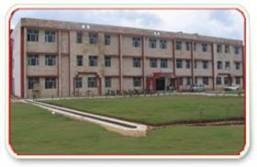
We are an English medium day boarding school CBSE in Bhilwara District (Rajasthan)(INDIA). In my school, our teacher teach the foreign languages also (German, Japan and French). Our school year starts in 1st July to ends of April. We go on summer vacation 1st May to end of June and Winter vacation & Deepawali vacation begin in month of November and December respectively. |
 |
ABOUT MY CITY (BHILWARA) |
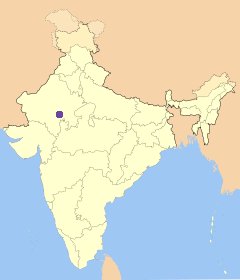 |
Introduction: It is not on the record as how the name of Bhilwara was ascribed to the which now forms the district Bhilwara. Tradition has it that it came to be known as Bhilwara because it was mostly inhabited by Bhils in old days. These Bhils were eventually driven away towards the hilly tracts and interior places of less importance by the ancestors of the peasant settlers. Ironically enough ,now very few Bhils live in this area. Another version recounts that the present Bhilwara city had a mint where coins known as 'BHILADI' were minted and from this denomination was derived the name of the district. Over the years it has emerged out as the TEXTILE CITY of Rajasthan. Now a days,Bhilwara is better known as the textile city in the country. |
 |
|
 |
ABOUT MY COUNTRY INDIA (HINDUSTAN AND BHARAT) |
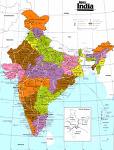
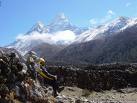
CAPITAL: New Delhi LAND AND PEOPLEINDIA is one of the oldest civilizations in the world with a kaleidoscopic variety and rich cultural heritage. It has achieved multifaceted socio-economic progress during the as 58 years of its Independence. India has become self-sufficient in agricultural production and is now the tenth industrialized country in the world and the sixth nation to have gone into outer space to conquer nature for the benefit of the people. Itcovers an area of 32,87,263 sq km, extending from the snow-covered Himalayan heights to the tropical rain forests of the south. As the seventh largest country in the world, India stands apart from the rest of Asia, marked off as it is by mountains and the sea, which give the country a distinct geographical entity.Bounded by the Great Himalayas in the north, it stretches southwards and at the Tropic of Cancer, tapers off into the Indian Ocean between the Bay of Bengal on the east and the Arabian Sea on the west. |
 |
 |
| PHYSICAL BACKGROUND |
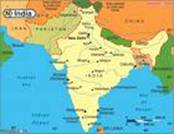
| Countries having a common border with India are Afghanistan and Pakistan to the north-west, China, Bhutan and Nepal to the north, Myanmar to the east and Banladesh to the east of West Bengal. Sri Lanka is separated from India by a narrow channel of sea formed by the Palk Strait and the Gulf of Mannar. |
 |
GROWTH OF POPULATION |
| India’s population truned to 1,027 million on March 2001. World’s second most populous country, India accounts for 16.7% of the total world population and occupies 2.24% of the total world area. |
CLIMATE |
There are four seasons : (a) winter( January-February), (b) hot weather summer (March – May), (c) Rainy Reason (June-September) , (d) North-East Monsoon ( October – December) |
NATIONAL FLAG |
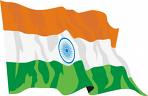
India's National Flag is a horizontal tri-colour of deep saffron at the top, white in the middle and dark green at the bottom in equal proportions. The ratio of the width of the flag to its length is two to three. In the centre of the white band is a wheel, in navy blue, which represents the chakra, Wheel of Dharma. Its design is also that of the wheel (chakra) which apprears on the abacus of the Sarnath Lion Capital of King Ashoka. |
 |
THE STATE'S EMBLEM |
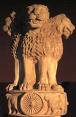 |
The State Emblem of India is an adaptation from the Sarnath Lion Capital of KingAshoka as preserved in the Sarnath Museum. The Government adopted it on January 26, 1950, the day India became a Republic.In the original of the Sarnath Capital, there are four lions, standing back to back, mounted on an abacus, with a frieze carrying a a sculpture in high relief on an elephant, a galloping horse, a bull and a lion separated by intervening wheels ( charkas) over a bell-shaped lotus. Carved out of a single block of polished santandstone, the Capital is crowned by the Wheel of the Law ( Dharma Chakra). In the State Emblem adoped by the Government , only three lions are visible, the fourth being hidden from view. The words,” Satyameva Jayate” fromthe Mundaka Upanishad, Meaning “ Truth alone Triumpsh” are inscribed. |
NATIONAL ANTHEM |
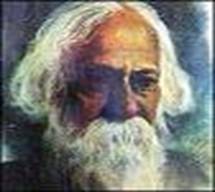
Rabindranath Tagore’s song “Jana-gana-mana’ was adopted by the Constituent Assembly as the National Anthem of India on January 24, 1950. The first stanza out of the five stanzas of the song forms the National Anthem: |
 |
LANGUAGES |
India has 18 officially recognized languages. The 1991 census had listed 1652 languages as mother tongues spoken in India. |
RELIGIONS |
Hinduism, Buddhism, Jainism, Islam, Sikhism, Christianity |
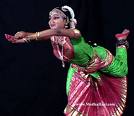
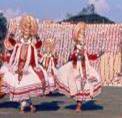
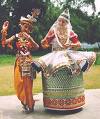
CLASSICAL DANCES |
 |
 |
 |
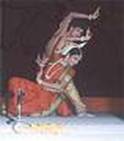 |
BHARATANATYAM |
KATHAKALI |
MANIPURI |
ODISSI |
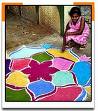
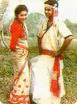
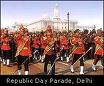
FESTIVALS |
 |
 |
 |
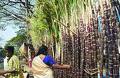
PONGAL |
BIHU |
REPUBLIC DAY |
 |
 |
 |
MAKER SANKRANTI |
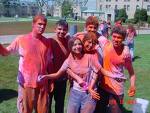
HOLI |
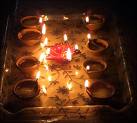
DIWALI |
 |
 |
 |
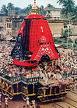
RATH YATRAJAGANNATH |
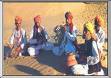
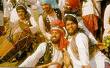
DESERT FESTIVAL |
BAISAKHI |
 |
 |
 |
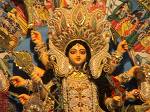
DURGA PUJA |
JANMASHTAMI |
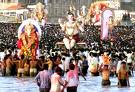
GANESH CHATURTHI |
LANDMARKS OF INDIAN HERITAGE |
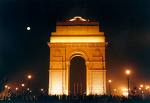 |
India Gate: India Gate Delhi is a war memorial erected to honour the 90,000 Indian soldiers who died in World War I |
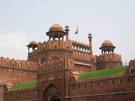
Red Fort, Delhi: Built by Shah Jehan in the 17th century, it remained a seat of Mughal power till the mutiny of 1857. |
 |
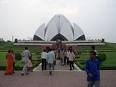 |
Bahi Temple (Lotus), Delhi :This architectural wonder, built in 1986, is a lotus shaped construction comprising of one huge hall meant for meditation. |
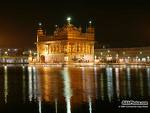
Golden Temple, Punjab : Golden Temple Or Hari Mandir, built in the 16th century, is the holiest of all Sikh shrines. Its dome is said to be made of 100kg of pure gold. |
 |
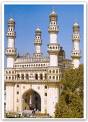 |
Char Minar, Hyderabad: This unique monument of four minarets was built to commenorate the cessation of the epidemic-plague-in the city of Hyderabad in 1591. It stood as a gateway leading to the palace. |
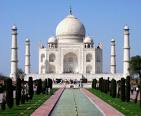
Taj Mahal, Agra: This magnificent structure in flawless, sparkling white marble was built in 18th years (1630-1648) by Emperor Shah Jehan to immortalize his love for his wife Mumtaz Mahal. |
 |
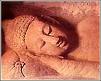 |
Ajanta Caves, Maharashtra: Set in the Sahyadri hills, the rock-cut Ajanta caves depict the death of the Buddha lying in the bed |
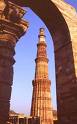
Qutub Minar, Delhi : This tower was built by the salve king Qutb-ud-din Aibak in the 13century. |
 |
NATIONAL BIRD |
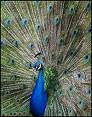 |
PEACOCK: The regal blue breasted bird with fan-shaped crest and beautiful long feathers is India’s national bird. The bird is protected under the Indian Wildlife (Protection) Act, 1972. |
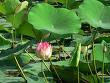
NATIONAL FLOWER |
Lotus: Lotus in full bloom has symbolized Indian culture since times immermorial. It has been recognized as the antional flower by the Government of India |
 |
NATIONAL ANIMAL |
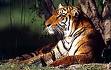 |
Tiger: The ferocious dark striped tiger is India’s national animal. |
NATIONAL CALENDAR |
As per recommendation of the Calendar Reform Committee, the Government of India adopted the Saka era as the basis of the national calendar . The Saka year also has 365 days and its dates have a permanent correspondence with those of the Gregorian calendar. |
 |
From Anurudh Kumar and The student of IV Class WITH Gitanjali and PRITHA BHATTACHARYA (VI) IMPORTANT WEBSITE FOR INDIAN CULTURAL INDIAN CULTURAL WEBSITE |
| Go back |  |