
25 Important Facts about Romania
Did you know that...
|
The most widespread form of Romanian
folk music is the doina?
[Doina is poetic and often melancholic sometames compared to the blues for that reason. Melodies are sometimes repeated in differing songs, and typically follow a descending pattern] That the words "dor" (to miss someone) and "doina" have no synonyms in any other language? The name Transylvania comes from Latin, and its meaning is 'beyond the forest'? ["trans"=beyond and "silva"=forest] |
 |
| Romanian
is one of the five languages in which religious services are performed
in the autonomous monastic state of Mount Athos? The name Romania comes from Rome or the (Eastern) Roman Empire and asserts the country's origins as a Roman colony? [In Late Antiquity the Roman Empire was often called simply Romania in Latin.] The modern Romania was born when the principalities of Moldavia and Wallachia merged in 1859, and become independent in 1877? In the Middle Ages Romanians lived in three distinct principalities: Wallachia, Moldavia and Transylvania? After the Second World War, Romania became a communist nation under pressure of the Soviet Union? |
 |
The decades-long reign of president Nicolae Ceausescu was ended with an uprising in late 1989? The legislative branch of the Romanian government consists of two chambers, the Senat (Senate), wich has 140 members, and the Camera Deputatilor (Chamber of Deputies), which has 345 members? Romania is divided into 41 judete or counties, and the municipality of Bucharest (Bucaresti) is the capital? |
The highest peak of Romania is Moldoveanu, reaching 2,444 metres? Unenployment in Romania is at 6.2% (2004), which is very long compared to other European countries? Most Romanians are members of the Romanian Orthodox Church, which is one of the churches of Eastern Orthodox Christianity? In Dobrogea (Dobruja), the region lying on the shore of the Black Sea, there is a small Muslim minority, a remmant of the Ottoman colonizationof that province in the past? Mihai Eminescu, late Romantic poeta, is the single mad best-known Romanian poet? |
| Romanians
celebrate Martisorul, a traditional holiday announcing the beginning of
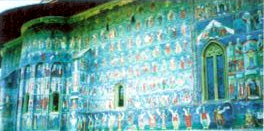
spring (1st of March)? Wallachia is home to the taraf bands, which are perhaps the most well-known expresion of Romanian folk culture? Delta Dunarii (the delta of the Danube) in Romania is ranked 4th place internationally as far as 'moist places/locuri umede' are concerned? Romania features some of the most beautiful monasteries worldwide, especially the Moldavian ones, which are hand-painted? |
 |
| Nadia
Comaneci was the first gymnast in the world to get the maximun mark (10)
in an international competition? Transylvania, the central part of Romania, is where the legend of Daracula was born? Sighisoara is the only medieval town (a former fortress) still existing in Europe and that is still inhabited? Romania is the only country in Europe where the brown bear still lives in the wilderness? Of the 300 pelicans (Pelicanus onocrotalus) existent in the whole world, there are 20 pairs currently living in Romania? |
| Romania |
 |
A Country full of Miracles
 |
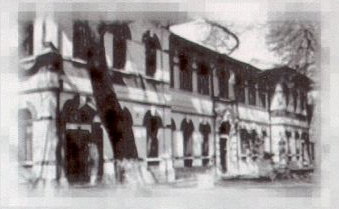 |
"Vasile
Alecsandri" High School is situated in Galati and has almost 800
students, aged 11-18, whose grades are between 5th and 12th. Galati
or Galatz is a city in eastern Romania, capital of Galati County, and
a port on the Danube River.
|
|
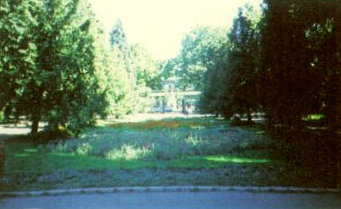
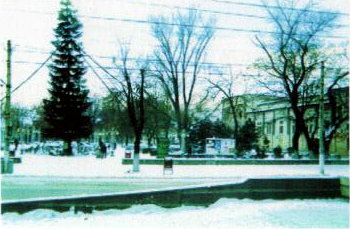
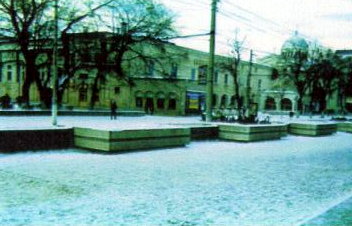
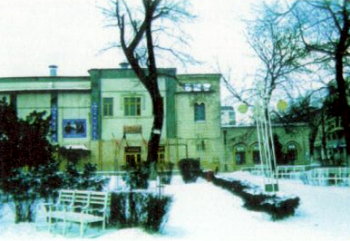
Here are some
representative pictures or our town, which mainly present the town-centre
and one of our most beautiful parks.
|
 |
 |
 |
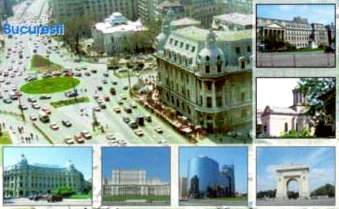 |
Romania is a country in southeastern Europe, sich in culture and natural resources. Bucharest is its capital and largest city. |
Climate
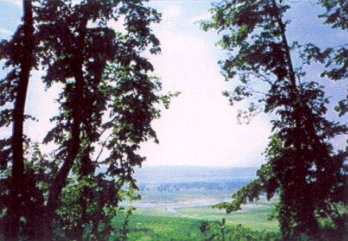
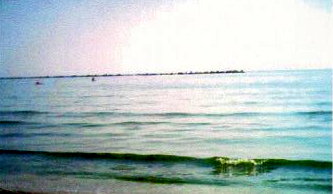
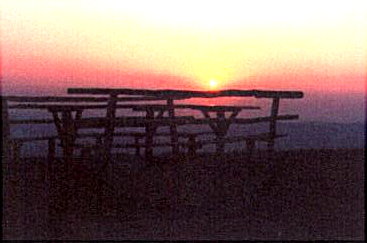
Romania has a temperate climate with four distinct seasons:
 |
 |
 |
 |
|
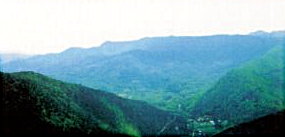
Temperatures are generally cooler
in the mountains, while the hottest areas in summer are the lowlands
of Walachia, Moldavia, and Dobruja.
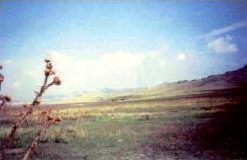
The climate of Dobruja is extremely dry: |
 |
 |
Geography
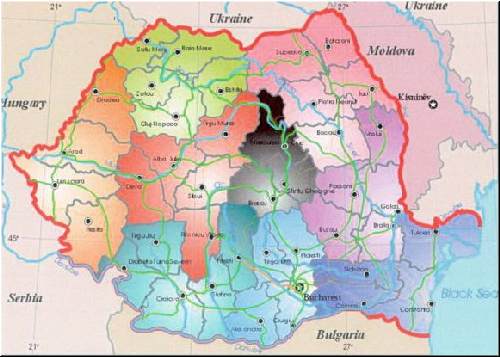
Romania is bounded on the north by Ukraine, on the east by Moldova, on the southeast by the Black Sea, on the south by Bulgaria, on the southwet by the Federal Republic of Yugoslavia, and on the west by Hungary. A long chain of mountain ranges curves through northern and central Romania. |
|
The Danube River forms much of the
country's southern and southwestern borders with Bulgaria and the Federal
Republic of Yogoeslavia, and the Prut River divides Romania from its
northeastern neighbor Moldova.
|
 |
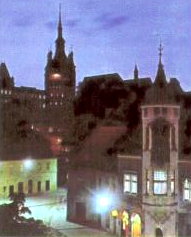 |
Transylvania occupies most of central
and northwestern Romania. In the middle of Transylvania lies Sighisoara,
a former defense fortress, The town is full of history and simply captivates
the tourists' attention.
|
|
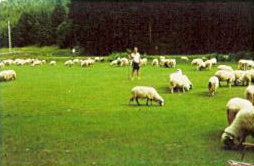
The areas stretching outward from
Romania's mountainous interior contain hills and tablelands full of
orchards and vineyards, and flat lowlands where farming takes place.
|
 |
 |
Rivers and lakes and seas
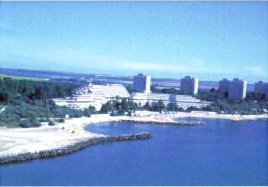
Most of Romania's major rivers are part of the Danube system; these include the Mures, the Somes, the Olt, the Prut, and the Siret. Romania has many small, freswater mountain lakes, but the largest lakes are saline lagoons on the coast of the Black Sea. |
|
Natural Resources
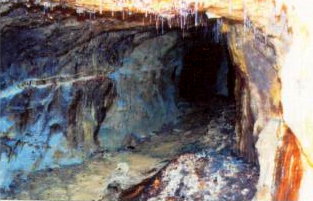
The principal resources of Romania are agricultural, but the country also has significant mineral deposits, particularly petroleum, natural gas, salt, hard coal, lignite (brown coal), iron ore, copper, bauxite, chromium. manganese, lead and zinc. |
 |
 |
Ethnics Origins
Ethnic Romanians are descendants of the inhabitants of Dacia, an ancient land roughly equivalent to modern Transylvania and Walachia. The largest minority groups are Hungarians, after which come Roma (or Gypsis) and Germans. |
|
Language
Romania's official language is Romanian, a Romance language derived mainly from Latin. Minority languages include Hungarian, German, Turkish, Serbo-Croatian, and Romani (the language of the Roma). English and French are taught in many schools and are the most common second languages spoken in Romania. |
|
English
mother to present solitude speculations to discover |
French
maman présenter solitude spéculations décubrir |
Romanian
mama a prezenta splitudine, singuratate speculatii adesoperi |
|
Religion
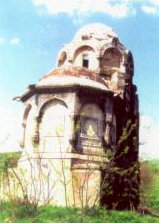
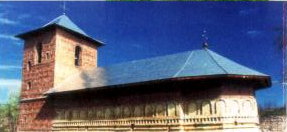
The main religion of Romania is Christianity. The Romanian Orthodox Church is the largest religious organization in the country. The country also contains Catholic churches, Protestant churches and significant numbers or Muslims and Jews. Romania is well-known in Europe for the numerous churches and monasteries manually painted and that emphasize the craftiness of Romanian people, as well as their profound faith in God. |
 |
 |
|
 |
Education |
| Go back |
 |