
The great depressión
ANA SOUTO VILLANUSTRE - 2º BACHARELATO A Brión 29 ABR 2013 Ana Souto Villanustre Mrs. Reagan US/VA History ID ESSAY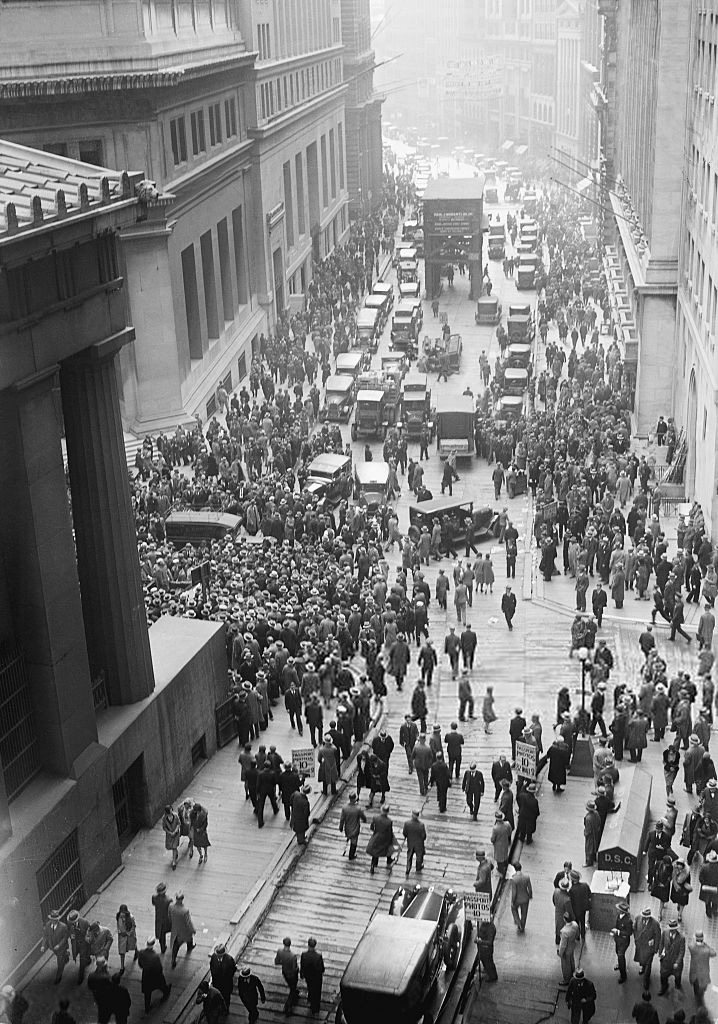 The Great Depression was a severe, long-term downturn in the economy that took place in the US. It happened in the 1930s, with its beginning at the end of the year 1929. There were several factors that led to the Great Depression in America.
Although on the surface it seemed that the US economy was doing well, there were some serious problems. There was a big difference between rich and poor, overproduction of goods, decreased demand for consumer goods and an excessive expansion of credit. People, as well as businesses, were borrowing a lot of money from banks, which is known as over speculation. People were spending money on the stock market, but they were buying stocks with borrowed money from banks. Not only people spent their money on the stock market, banks were also putting their deposits. Business began to suffer bankrupt, which led to the sinking of stock prices. The stocks had been going up, but all of a sudden, they went down. Americans panicked and all at one time, they decided to sell their stocks, afraid of what could happen next. The stock market crashed and banks collapsed, running out of money. The stock market crash of 1929 was one of the main causes of the Great Depression. That Back Tuesday was only the beginning of the nightmare that would affect the country in the following years.
Another cause was the Federal Reserve’s failure. The national bank took money out of circulation, which caused banks and businesses to fall. The right thing to do would have been putting more money into circulation, which would have aided banks and businesses. The reduction on money supply led to inflation. High taxes on imported goods were another of the causes. In 1930 a Tariff Act was passed, called Hawley-Smoot Act of 1930. Goods coming in from other countries were taxed, while other countries retaliated by taxing our goods into their countries. High protective taxes made trade decrease in a considerable way and US businesses fell. America’s dominance over the rest of the countries was related to the Great Depression, too as well as the reparations and the money lent to the Allies during World War I. When the war was over, Germany was accused of being the one who began the conflict and Germans were forced to pay war reparations. Germany had to pay the cost of damages in the war, which was superior to 30 billion dollars. The US agreed to give loans to Germany, so Germans would be able to give the money to the Allied Powers. The Allies would use that money to pay war debt to the US. Because of the stock market crash and the downturn in the economy, the US wasn’t able anymore to give loans to Germany, which unabled Germany to give money to the Allies and in consequence, the Allies weren’t able to pay the US back.
 There were many effects of Great Depression, such as massive unemployment. People didn’t have a job, although they were willing to work. Even farmers were hit because they had borrowed a lot of money from banks. Farmers had also experienced good times because of war, when Europe needed goods from them. The demand wasn’t as high as back then any more. There were farm foreclosures and there was also migration. Farmers migrated out of the Great Plains because it became a Dustbowl. Dust storms affected that part of the country, making it impossible to have a normal life. There was a collapse on the financial system due to bank failures. During the Great Depression bank runs were very common, because people wanted to withdraw all their money. Banks, the entrance to banks and streets, were full of people who were willing to get back their savings. Because of the economic situation, the demand for goods declined and there was political unrest, which means that political unions got even more upset. There was also a massive homelessness and poverty. Food lines were very common back then. A big amount of people didn’t even have money to buy food, so they waited in long queues until they got some bread or some soup. Those who couldn’t afford a house lived at the street or in other parts of the city, were they built poor houses. Those places were known as Hoover buildings; their name comes from Hoover, a president during the Great Depression who didn’t realize the gravity of the situation.