| |
|
| |
|
| |
|
| |
|
| |
|
| |
|
| |
|
| |
|
| |
|
| |
Easter is a very important Christian festivity. People celebrate the resurrection of Jesus Christ on the third day after his death. |
| |
Easter is celebrated on the first Sunday after the full moon in March. This is between 22 March and 25 April.
The origin of the English word "Easter" is uncertain. It probably comes from the pagan goddess of spring, Eostre. The pagan celebrated the arrival of spring with special festivals. |
|
|
| |
|
The Christian Easter slowly replaced the pagan festivals, but some symbols of the spring festival remained, such as flowers, eggs, rabbits and bunnies. The tradition of the Easter basket is ancient. The pagans offered their eggs in grass baskets to the goddess Eostre. |
|
| |
|
| |
In Britain and in the United States it is usual to send Easter cards to friens and relatives. |
| |
|
| |
Before Easter Day American and British children paint Easter eggs with bright colours and designs. Coloured eggs were exchanged at ancient spring festivals. The egg is an ancient symbol of life and fertility. The decoration of Easter eggs began in England during the Middle Ages. Members of noble families gave one another gold-covered eggs as Easter presents! |
| |
|
| |
On Easter Day in the United States there is the traditional Easter egg hunt in every city and town. Parents tell their children that the Easter bunny hid many eggs in the park. The children must find the hidden eggs. Eggs are hidden in the grass, in a shrub or under a tree. When the children find the eggs they put them in colourful Easter baskets. The child with the biggest number of eggs is the winner.
|
|
|
| |
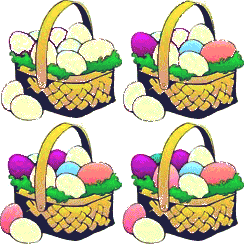 |
The tradition of the Easter bunny and the basket of eggs was introduced by German immigrants long ago. |
|
| |
|
| |
|
| |
|