
Reverend Hale- The Crucible
Ana Souto Villanustre Mrs. Higgins Honors English – 5th Period Monday, 11/14/2011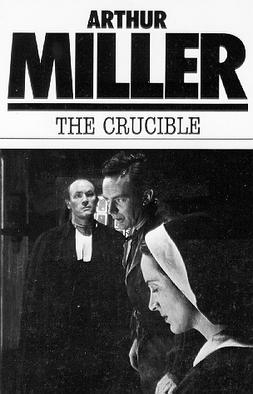 Reverend Hale’s character is dramatically changed throughout Arthur’s Miller play The Crucible. Hale is the character who suffers the strongest transformation trough the entire play. When Hale first arrives in Salem, he appears to be strong and resolute. He is seen as a good man, as all knowing and as the perfect person to solve the problem about witchcraft. All the events that take place during his stay in the town make him change in a considerable way; but without a doubt, one of the main factors is his research of the truth. The Hale who first arrives in Salem and believes the afflicted girls isn’t the same Hale from the end; the Hale who trusts John Proctor and defends the innocents that have been accused.
In the beginning of the play, Hale goes to Salem after being called because of the sleeping girls and witchcraft. People in the town are honored to be in his presence, they want to return to their normal lives and they trust Hale to make their wish come true. They think he can help them, as John Proctor shows in one of his speeches. “I’ve heard you to be a sensible man, Mr. Hale. I hope you’ll leave some of it in Salem” (ACT I). As the purpose of being there is to find out what happens to the girls, the first thing he does is examine them. After the examination and after listening to Abigail, he declares they are free. Abigail denies she and the girls were engaged in witchcraft. She tells him they were just dancing at the forest and that they didn’t conjure the Devil while they were there. However, she accuses Tituba of witchcraft, who is immediately called and interviewed.
The town shows him respect in Act I and Act II and they also show reverence. He serves on the court, which makes him be seen as a voice of authority. Despite of being at the court, he is more personable than the rest of the judges. Hale’s thoughts change when citizens begin to be accused of witchcraft and they have to declare in front of the court. Hale is a good man and he wants to listen to both sides, so he goes from house to house interviewing the families. He goes to John Proctor’s home, too and interviews him. “I am a stranger here as you know. And in my ignorance I find it hard to draw a clear opinion of them that come accused before the court. And so this afternoon and tonight, I go from house to house. I come now from Rebecca Nurse’s house” (ACT II). “Proctor, let you open with me now, for I have a rumor that troubles me. It's said you hold no belief that there may even be witches in the world. Is that true, sir” (ACT II)? Hale wants to find the truth and the answer to all the questions. The fact that innocent people are being accused makes him see things with different eyes. He is astonished when Rebecca Nurse, Elizabeth Proctor and Martha are accused, because he knows they are good women.
In Act III Hale starts doubting the court and realises things are wrong. Proctor tells him Abby is lying, that she has been lying for the entire time, and Hale trusts him. Hale wants to stop what’s going on at the town, because the girls are guilty of what’s happening to all accused innocent citizens. Hale joins the side that defends the innocent, although he goes against the rest of the judges, who support the afflicted girls. “I denounce these proceedings! I quit this court!” (ACT III).
Hale goes back to home, in Beverly and in Act IV, he returns to Salem and acts as a minister to people who are in jail accused of witchcraft. Hale’s sacrifice of reputability for piety, shows his true character, his true self. He may not be the strong self-confident man he was in the first Act, but he will not continue to stand up for what is wrong. Proctor is also in jail and he is going to be executed, but Hale wants to help him. The only way John can save his life is signing his confession. Hale tries to convince Elizabeth to help John give his lie. “Let you not mistake your duty as I mistook my own. I came into this village like a bridegroom to his beloved, bearing gifts of high religion; the very crowns of holy law I brought, and what I touched with my bright confidence, it died; and where I turned the eye of my great faith, blood flowed up” (ACT IV). One Proctor has signed his confession, he rips down the paper to save his own reputation, to save his name. Hale can’t stop him and John is executed in front of a Hale heavy with guilt. Years later Hale goes back to Salem to help all the victims of witchcraft.
Hale is a good man, who wants to look for the truth in order to save all the innocent people. During the whole play he changes more than any of the other characters and at the end he is a very different man than the Hale who first arrived in Salem. He walked along the path of the truth, the path of his own transformation.