Departamentos > Tecnoloxía > Technology >Electrical and electronical devices
 |
I can help you to understand some electrical concepts. Listen and learn because your teacher will ask you... ha ha ha ha!
|
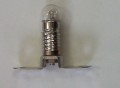 |
Light bulb: in this element an electric current passes through a thin filament, heating it until it produces light. |
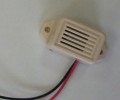 |
Buzzer: An electronic device that makes a buzzing sound. |
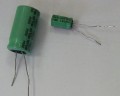 |
Capacitor is a passive electrical component that can store energy in the electric field between a pair of conductors. |
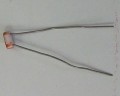 |
Light Dependent Resistor is a resistor whose resistance decreases with increasing incident light intensity. |
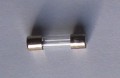 |
In electronics and electrical engineering a fuse (short for fusible link) is a type of overcurrent protection device. Its essential component is a metal wire or strip that melts when too much current flows, which breaks the circuit in which it is connected, thus protecting the circuit's other components from damage due to excessive current. |
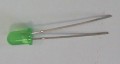 |
A LED is a semiconductor diode that emits light when an electric current is applied in the forward direction of the device. |
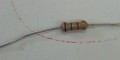 |
A resistor is a two-terminal electronic component designed to oppose an electric current by producing a voltage drop between its terminals in proportion to the current. |
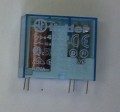 |
Relay: is an electrical switch that opens and closes under the control of another electrical circuit. |
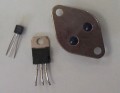 |
Transistor: is made of a solid piece of a semiconductor material, with at least three terminals for connection to an external circuit. |
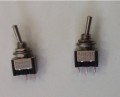 |
A switch is a mechanical device used to connect and disconnect an electric circuit. |
 |
Resistors in a parallel configuration each have the same voltage. |
 |
The current through resistors in series stays the same, but the voltage across each resistor can be different. The sum of the potential differences (voltage) is equal to the total voltage. |
| Voltage | Voltage (sometimes also called electric potential difference or electrical tension) is the electrical potential difference between two points of an electrical or electronic circuit, expressed in volts. |
| Electrical current | Electric current is the flow of electrical charge. The amount of electric charges flowing through a section in a second. The SI unit of electric current is the ampere. |
| Resistance | Electrical resistance is a ratio of the degree to which an object opposes an electric current through it, measured in Ohms (Ω). |

