Primavera / Spring
|
|
GALEGO |
ENGLISH |
|
A primavera é a época onde máis
traballo hai no agro. Hai que preparar o campo para sementar, estercar e
arar. Tamén hai que ir collendo a herba para facer os silos, botar o
millo, as patacas e a horta. Todo isto sen esquecer aos animais, que
poden estar tendo crías. |
Spring is the busiest season for a
farmer.They must sow, fertilize and plough. They also have to gather
grass and turn it into silos; plant corn, potatoes and vegetables. All
this without forgetting the animals which may be breeding. |
| A
fertilización |
Fertlizing |
 |
Foto 1. Montóns de esterco.
O sistema tradicional de fertilización é con esterco, fertilizante orgánico de orixe
animal. O esterco é levado ao campo e deixase en montóns que logo se
estenden. |
Picture 1. Heaps of
manure.
Manure, the natural fertilizer of animal origin, was the traditional
way of fertilizing the soil. Manure was carried to the field and put
into piles on the land. |
 |
Foto 2. Cuba.
Ás veces úsase o xurro como sistema de fertilización. Este recóllese na
cuba e logo bótase no terreo. |
Picture 2. Vacuum tanker.
Sometimes liquid manure is used as a fertilising system. Manure is collected
with the vacuum tank
and then applied all over the land. |
 |
Foto 3. Fertilizando.
Sen embargo, tamén é necesario aportar fertilizantes químicos minerais.
Estes pódense botar a man. |
Picture 3. Fertilizing.
However, it is also necessary to add chemical fertilizers to the soil.
These are usually added by hand. |
 |
Foto 4. Fertilizadora.
Pero tamén úsase a
fertilizadora. |
Picture 4. Fertilizer.
Spraying machines can also be used.
|
| O fresado |
Harrowing |
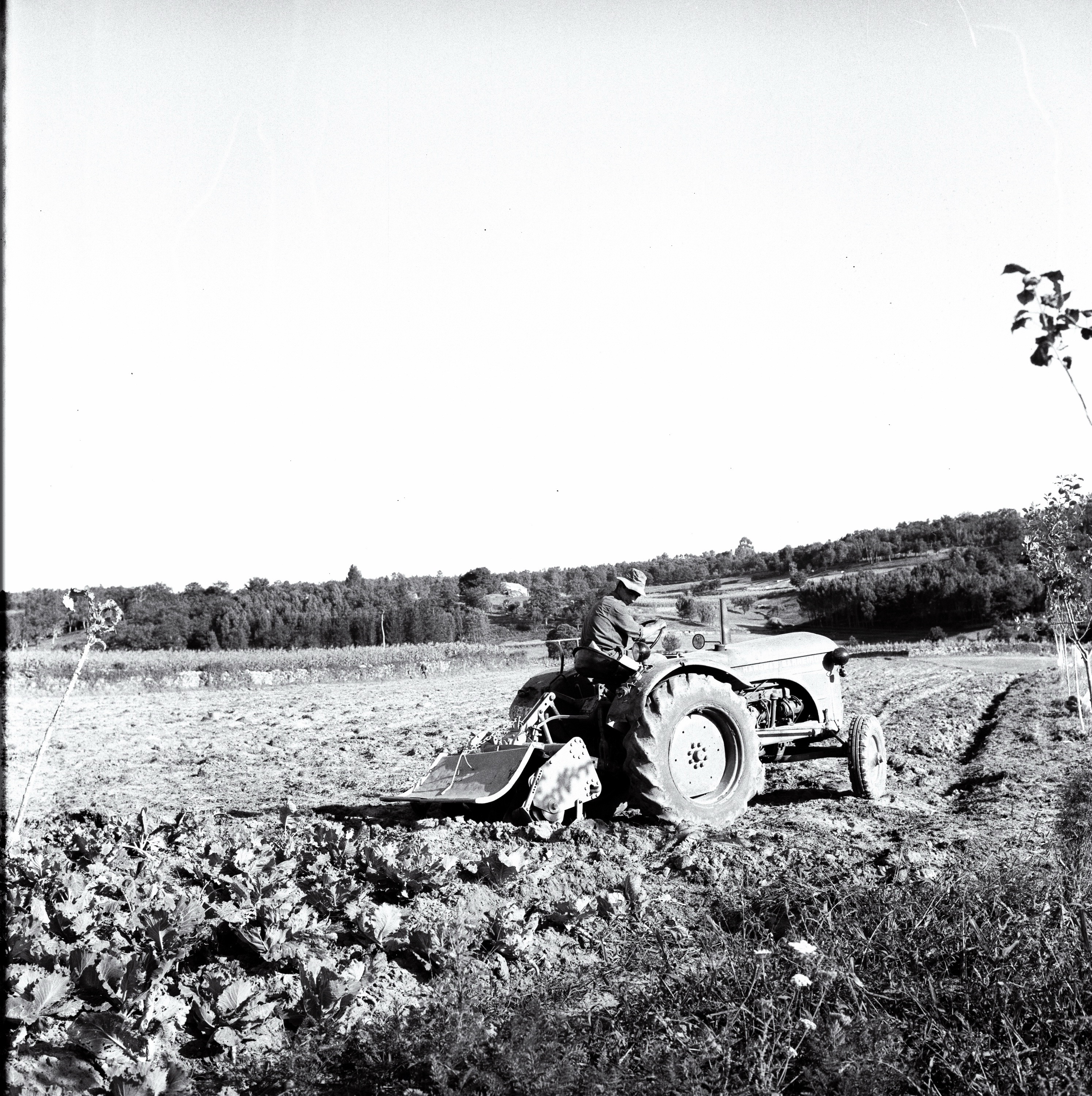 |
Foto 5. Fresadora.
Outro labor
que hai que facer antes do arado é fresar. Consiste en desfacer os terróns, abrindo camiño para que logo pase o
arado. Antigamente este labor facíase coa escarpadora. |
Picture 5. Harrow
Another agricultural work that had to be made before ploughing was
harrowing.
It consists of breaking up the clods and opening the way for the plough.
In the old days, this task was made with the "escarpadora". |
 |
Foto 6. Fresando.
Hoxe en día para fresar pásase a fresadora co tractor.
|
Picture 6. Harrowing.
Today the harrow is used for this task. |
| O arado |
Ploughing |
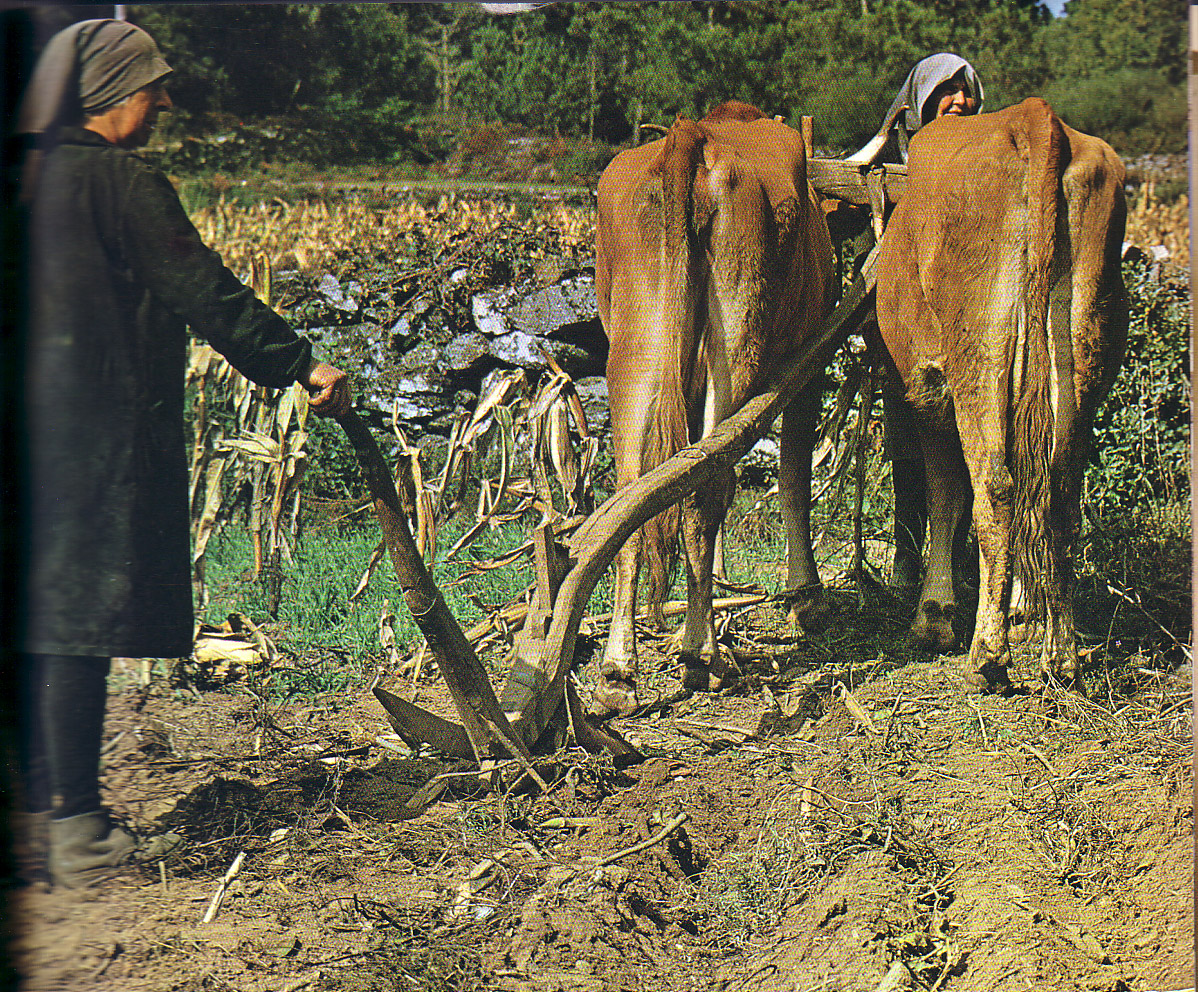 |
Foto 7. Tiro de
vacas.
Antigamente o labor de arar facíase co arado romano e coa axuda dun
tiro de bois ou de vacas. |
Picture 7. Team of cows.
In the old days ploughing was made with the roman plough and a team of
oxen or cows. |
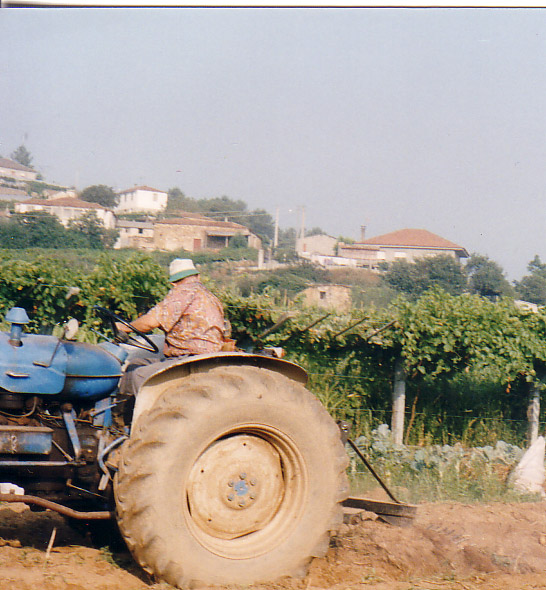 |
Foto 8. Tractor con arado.
Dende xa hai moito tempo, a tracción animal vén de ser
substituida polo tractor e o arado mecánico.O arado prepara a terra para a sementeira, levantándoa e facendo sucos,
permitindo que a terra se airee e quede lista para recibir a semente. |
Picture 8. Tractor with plough.
Since long time ago, animal traction has been replaced by the tractor
and the mechanic plough. Ploughing prepared the land for the sowing,
opening it and letting the air in so it can be more productive. |
 |
Foto 9. Motocultivador.
Para extensións de terreo máis pequenas tamén se usa o motocultivador.
Este pode ser guiado por unha persoa ao mesmo tempo que vai
andando. |
Picture 9. Motocultivator.
In smaller lots a motocultivator can also be used. This is guided by a
person as it is walking. |
 |
Foto 10. Campo arado.
O resultado de todas estes labores é un campo arado, listo para a sementeira. |
Picture 10. Ploughed field.
The results of all these tasks is a ploughed field, ready to be sowed. |
| Botar o
millo |
Sowing the
corn. |
 |
Foto 11. Sementeira.
Na primavera hai que botar o millo. Isto pódese facer a dedo ou mecanicamente.
A semente lévase no mandil atado á cintura e vaise botando polo rego. Se a extensión é moi grande
necesítanse varias persoas. |
Picture
11. Sowing.
In
spring corn has to be sowed. This can be made by hand or mechanically.
The seeds are carried in an apron tied to the waist and is dropped one
by one in the furrows. If the land is large a lot of people is needed. |
 |
Foto 12. Sementadora.
Cando a extensión de terreo é máis grande pódese usar unha sementadora
que vai ensamblada ao tractor. A sementadora leva uns depósitos para a
semente, vai facendo regos e depositando a semente neles. |
Picture 12. Sowing machine.
When the extension of the land is big farmers use a sower machine and
the tractor.The sowing machine has deposits for the seeds, makes furrows
and drops the seed in them. |
 |
Foto 13. Sementadora.
A introdución da sembradora facilitou
moito o labor da sementeira en grandes extensións. |
Picture 13. Sowing machine.
The introduction of the sowing machine made sowing easier in big lots of
land. |
| Poñer as patacas |
Planting
potatoes. |
 |
Foto 14. Sachando.
Na primavera, dependendo da zona, póñense as patacas. As plantas sairán
nuns días e estarán listas a mediados do verán. |
Picture 14. Digging.
In spring, depending on the area, potatoes have to be planted. The
plants will come out in a few days and they will be ready in mid
summer. |
| O ensilado |
Silos |
 |
Foto 15. Collendo a herba.
Na primavera, a herba crece moito e é o momento de facer unha primeira
recollida para almacenar e ensilar de cara ao inverno. O primeiro paso
do ensilado é cortar a herba coa segadora, arranxala en vías para
logo collela co autocargador. |
Picture
15. Gathering grass.
In spring, grass grows quickly so it is the time to harvest it and store
it in silos to be used in winter. The first step is reaping the grass
with the reaping machine, arrange it into lines and collect it with the
trailer. |
 |
Foto 16. O autocargador.
O autocargador recolle a herba que se leva ata onde se vai proceder a
ensilar. Ás veces o ensilado faise no mesmo prado. |
Picture 16. Self-loading
trailer.
The trailer collects the grass and carried it to the place where it is
going to be processed. Sometimes it is in the same field. |
 |
Foto 17. Carrexando a herba.
Os remolques van traendo a herba. Algunha vaise transformar en pacas
redondas e outra vaise gardar nun silo grande cuberto cun plástico
negro. |
Picture 17. Carrying the grass.
Trailers carry the grass. Some is processed into round bales, some other
is turned into a big silo covered with a black plastic.
|
 |
Foto 18. Silos pequenos.
A herba empácase en pacas redondas que despois son cubertas con plástico
para que se conserve ben durante moito tempo. Estas pacas quedan no mesmo prado ou almacenadas preto da corte. |
Picture 18. Small silos.
Grass is packed in round bales that are later covered with plastic so
they keep for a long time. This bales are left on the very field or
stored near the stable. |
 |
Foto 19. Silo grande.
Nesta outra modalidade, a herba amoréase nun só montón grande, quítaselle
o aire e cóbrese co plástico. Enriba pónselle peso para que non entre
o aire. Así consérvase para alimentar as vacas. |
Picture 19. Big silo.
With this system, grass is heaped in an only pile, kept in a vacuum and
covered with a plastic. Some weight is put on top so air does not get
in. This way, grass is preserved and cows are fed with it. |
|
Sulfatar |
Pesticide
spraying |
 |
Foto 20. Sulfatador.
Na primavera aparecen as primeiras pragas de insectos e as pestes polo
que tamén hai que sulfatar a viña e outros cultivos. Como é pouca
extensión, faise con sulfatadoras individuais. |
Picture 20. Sprayer.
In spring insects and plagues appear so it is necessary to spray the
vine and other crops with pesticides. As it is usually a small area,
individual sprayers are used. |
|
Plantar na horta |
Planting
vegetables |
 |
Foto 21. Porral.
Nesta época hai que preparar a horta cos cultivos que se darán no verán.
Plántanse os productos hortícolas nun terreo ou "porral" por zonas. |
Picture 21. Vegetable garden.
In this season you can prepare a small vegetable garden or
"porral". Vegetables are planted by sectors. |
 |
 |
Foto 22. Verduras.
Os produtos hortícolas máis comúns nun porral son: leituga, tomates, feixóns,
tirabeques, cebolas, allos porros...etc.
que se consumirán no verán polos membros da familia. |
Picture 22. vegetables.
The most typical green products in a "porral" are:
lettuce, tomatoes, beans, sugar peas, onions, garlic...etc thar will be
eaten during the summer by the family. |
 |
 |
|
Cría do porco |
Pig breeding |
 |
Foto 23. Porca e porquiños.
Aínda que os animais poden ter crías todo o ano, a chegada do bo tempo
coa primavera fai que sexa un dos periodos favoritos para ter camadas de
porcos ou años. Aquí vemos unha camada de porquiños e a porca deitada dándolle de mamar. |
Picture 23. Sow and piglets.
Even though farm animals can breed all over the year, the coming of nice
weather makes it a good season for pig and lamb breeding. In this
picture we can see a sow lying down and the piglets suckling.
|
 |
Foto 24. Porca.
A porca para dar de mamar déitase. Tamén hai que vixiar aos ranchos
porque sempre hai un que queda sen mamar. Este chámase "arricol" soe ser
máis pequeno e hai que darlle coa mamadeira. |
Picture 24. Sow.
A sow to feed the piglets has to lie down. Piglets
must also be looked after because there is usually one of them which is
not able to feed by himself. This is the runt or "arricol" because it is
the tiniest of the litter and it has to be fed artificially. |
|
Os pitos |
Chicks |
 |
Foto 25. Galiña e pitos.
Tamén na primavera as galiñas chocas
teñen pitos. |
Picture 25. Hen and chicks.
In spring clocking hens have chicks. |
