
Outono / Autumn |
||
GALEGO |
ENGLISH |
|
|
No outono prepáranse pratos cos produtos recollidos no agro: o viño e o pan novos, por exemplo. Tamén son propias desta época as castañas asadas que se toman na celebración do magosto. |
In the autumn the meals are prepared with the products harvested in the fields: the new bread and wine, for example. Roasted chestnuts are also typical of this season, they are eaten in the "magosto" festivals. |
|
| Doces e bebidas | Sweets and drinks | |
| Viño | Wine | |
 |
Foto 1. Elaboración do
viño. O viño faise na casa seguindo un procedemento na maioría dos casos artesanal, xa que a colleita é pequena e non dá para unha produción comercial. Todo o proceso comeza coa vendima, momento en que se collen os acios de uva e se levan en cestos á adega. A uva botábase no lagar e pisábase cos pés ou co macico e deixábase ferver dous ou tres días. O mosto ía caendo na tinalla do lagar e de aí vaise pasando aos pipos. |
Picture 1. Wine
process. The wine is elaborated at home following a homemade procedure most of the times because the harvest is small and cannot be sold to the industry. The process starts with the grape harvest, when the bunches are picked up and taken in baskets to the cellar. The grapes are poured in the grape press, they are squashed with the feet or with the press and is left to ferment two or three days. The grape juice ran down to the barrel. |
 |
Foto 2. O trasfego.
Despois prensábase o bagazo que quedaba no lagar e ese viño repartíase nas distintas pipas onde continúaba fervendo. Hai que deixar destapada a barrica un tempo mentres ferve para que poida expulsar os gases. Logo sélase ben a barrica. O bagazo prensado gárdase para facer augardente. Antes de que remate a fervura, faise a proba do viño doce. En febreiro ou marzo trasfégase o viño a outras barricas. |
Picture 2. The
transfer. After that the grape skins were pressed too and that liquid was added to the wine barrels and left to ferment again. The barrels were open while fermenting so gas could come out. Then the barrel was sealed. The pressings were kept apart to make spirit. Before the ferment is ready, the grape juice or sweet wine is tried. In February or March the wine was transfered to another barrel. |
 |
Foto 3.
Embotellado.
Ultimamente estase a estender o costume de embotellalo para conservalo
mellor.
|
Picture
3.
|
| Comidas | Meals | |
| Pan | Bread | |
 |
Foto 4. Pan. |
Picture 1. Wheat bread. |
 |
Foto 5. Amasar.
Mestúrase a fariña, a auga o fermento e un chisco de sal ata que teña consistencia elástica. |
Picture 2. Kneading. Mix the flour, water, yeast and a pinch of salt in the kneading machine until you get an elastic dough. |
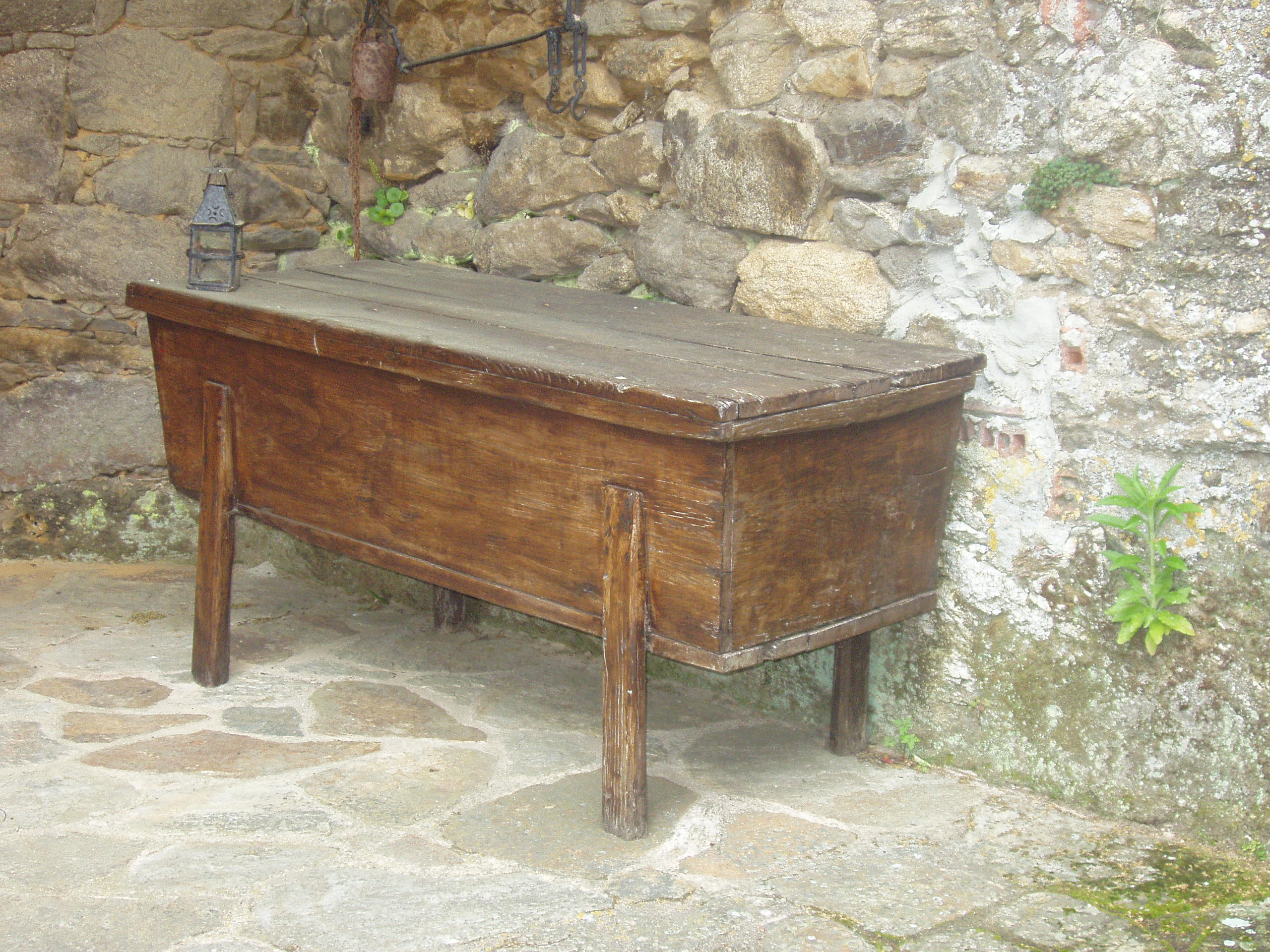 |
Foto 6. A artesa. Antigamente esta operación facíase na artesa. |
Picture 6. The trough. In ancient times this process was made in the trough. |
 |
Foto 7. Levedar. Déixase levedar cuberto cun pano nun sitio morno durante 30 minutos. |
Picture 7. Rising. Leave to rise covered with a cloth in a warm place for 30 minutes. |
 |
Foto 8. As bolas. |
Picture 8. The loaves. |
 |
Foto 9.
O forno. Tradicionalmente o forno da casa era de pedra. O pan poñíase na pa para introducilo dentro do forno que xa estaba quente e do que se retiraran as cinzas. |
Picture 9. The oven |
 |
Foto 10. No forno. Hoxe en día as bolas ou moletes colócanse na bandexa do forno que xa debe estar quente a uns 180ºC. As bolas van ao forno durante uns 15-30 minutos ou máis, dependendo do tamaño das pezas. |
Picture 10. In the oven. |
 |
Foto 11. Pan recén feito. |
Picture 11. Just baked bread. |
| Castañas | Chestnuts | |
 |
Foto 12.
Castañas asadas. |
Picture 12. Roasted chestnuts. |
 |
Foto 13.
Castañas cocidas. |
Picture 13. Boiled chestnuts. |
| Caldo | "Caldo" | |
 |
Foto 14. Preparando caldo na lareira. |
Picture 14. Caldo in the
fireplace. |
 |
Foto 15. Caldo. |
Picture 15. "Caldo". |
| GUISO DE FABAS | ||
 |
Ingredientes: Fabas, macarróns,
patacas, dous ovos; algo de miúdos do porco (uña, ósos de soá, costela...),
aceite, pemento e cebola para o rustrido. |
Ingredients: Beans, maccaroons, potatoes, 2 eggs, some bits of pork (nail, bones, rib), oil, paprika and onion for the sauce. |
 |
Procedemento: Nunha pota ponse ao lume a auga, os miúdos coas fabas, verdes ou remolladas, se son secas. Cando xa abranda, engádense as patacas e a continuación os macarróns. De seguido, prepárase un rustrido con aceite, cebola, e pemento; bótase este sobre o contido da pota e déixase acabar de facer. Antes de retiralo do lume, bátense os ovos e bótanselle ao guiso de forma que callen por arriba. |
Procedure: In a pan with water, put the meat and beans (fresh or soaked if they are dry). When soft, add potatoes and maccaroons. After that, prepare a sauce in a frying pan with oil, onion and paprika; pour in the pan and leave to boil. After removing it, beat the eggs and add to the pan so they clot on the surface. |